One C4 model. Every view in sync.
Architecture documentation for software teams. Model your system once, and every view from context to components stays current.
Get started freeFree for one editor · Readers are always free
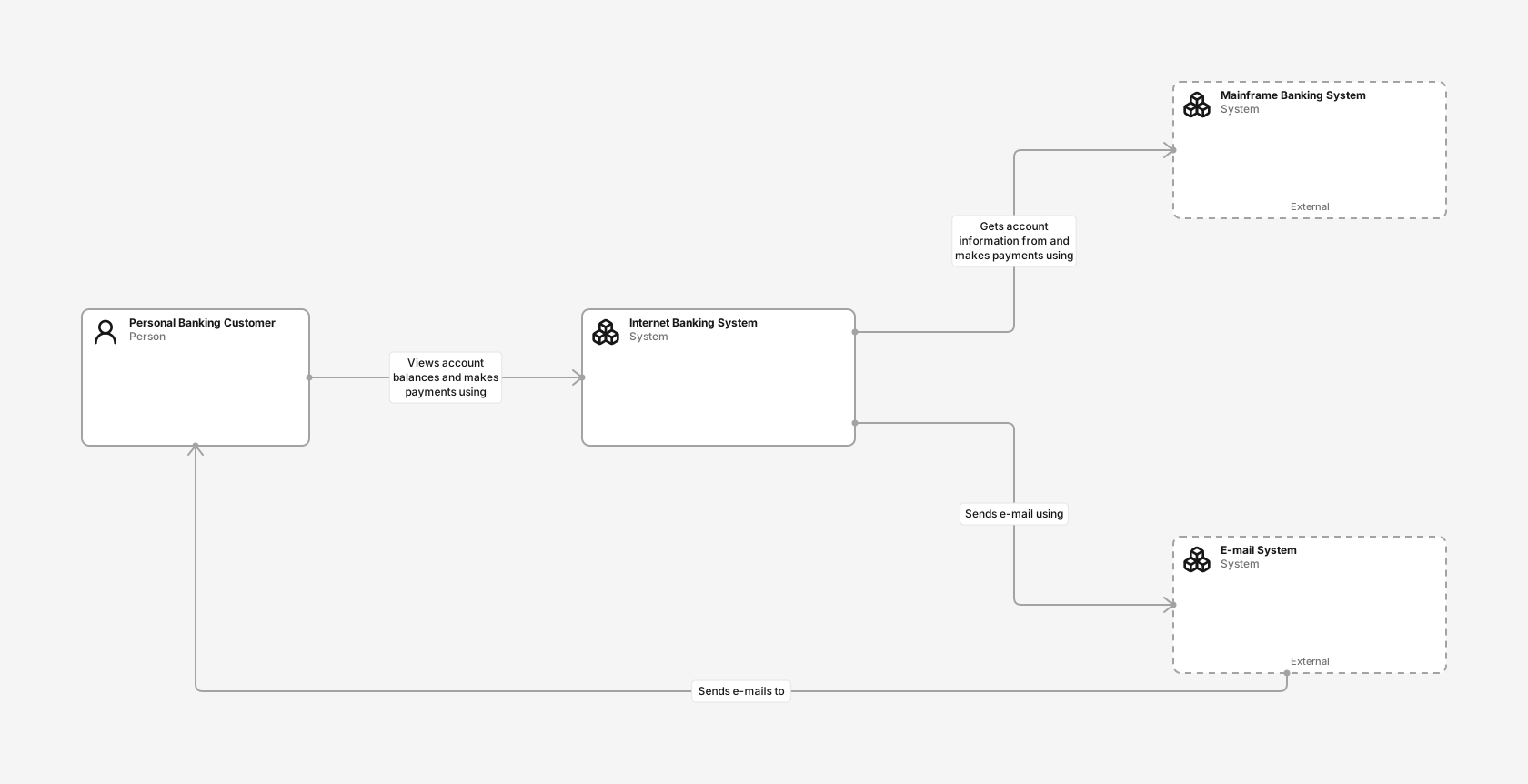
See the banking customer, the internet banking system and its connections to the mainframe and email systems.
Explore this exampleBuilt for everyone who works with the architecture
- ArchitectsKeep one model current instead of redrawing slides.
- EngineersSee what depends on a service before you change it.
- Engineering leadersSee owners, lifecycle and what is about to change.
- StakeholdersRead the level that fits, for free, on a live link.
- AI agentsRead the model through MCP and propose changes in a Draft.
One shared model. Different views.
Give engineers, stakeholders, and new team members the right level of detail without maintaining separate docs, so the architecture stays useful as the system changes.
No more redrawing
Model once instead of redrawing the same system
Right level of detail
One model, a view for every audience
Docs that stay current
Capture architecture while decisions are fresh
Revision has become part of how we work internally. We use it early to align on the architecture and deliver better solutions to our customers.
 Kristofer AndersenCEO, Integrio

Because the structure is built in, our documentation stays consistent without extra work. It’s faster to write, review, and understand.
 Tor SunesonBusiness Architect, Softronic

Everything the model needs after the first diagram
From the first container to the next change, Revision keeps the architecture simple to read, easy to share and structured enough for AI and API workflows.
- Model
Model once, every view updates
C1 to C3 levels, flows, deployments and 580+ technologies in one shared model.
- Explore
Answer impact questions fast
Trace dependencies, see who consumes each API and group the model on team or technology maps.
- Design
Propose the next version in a Draft
Work on the future state beside Current, show it to your team and merge it when it is ready.
- Govern
Keep the model trustworthy
Owner teams, lifecycle, attributes and diagram checks that show what is missing.
- Share
Share with everyone. Free.
Live links, embeds and images that stay current. Readers never need a seat.
- Automate
AI agents and API
MCP for agents, a REST API for your tools and a Backstage plugin. Agent changes land in a Draft.
Explore
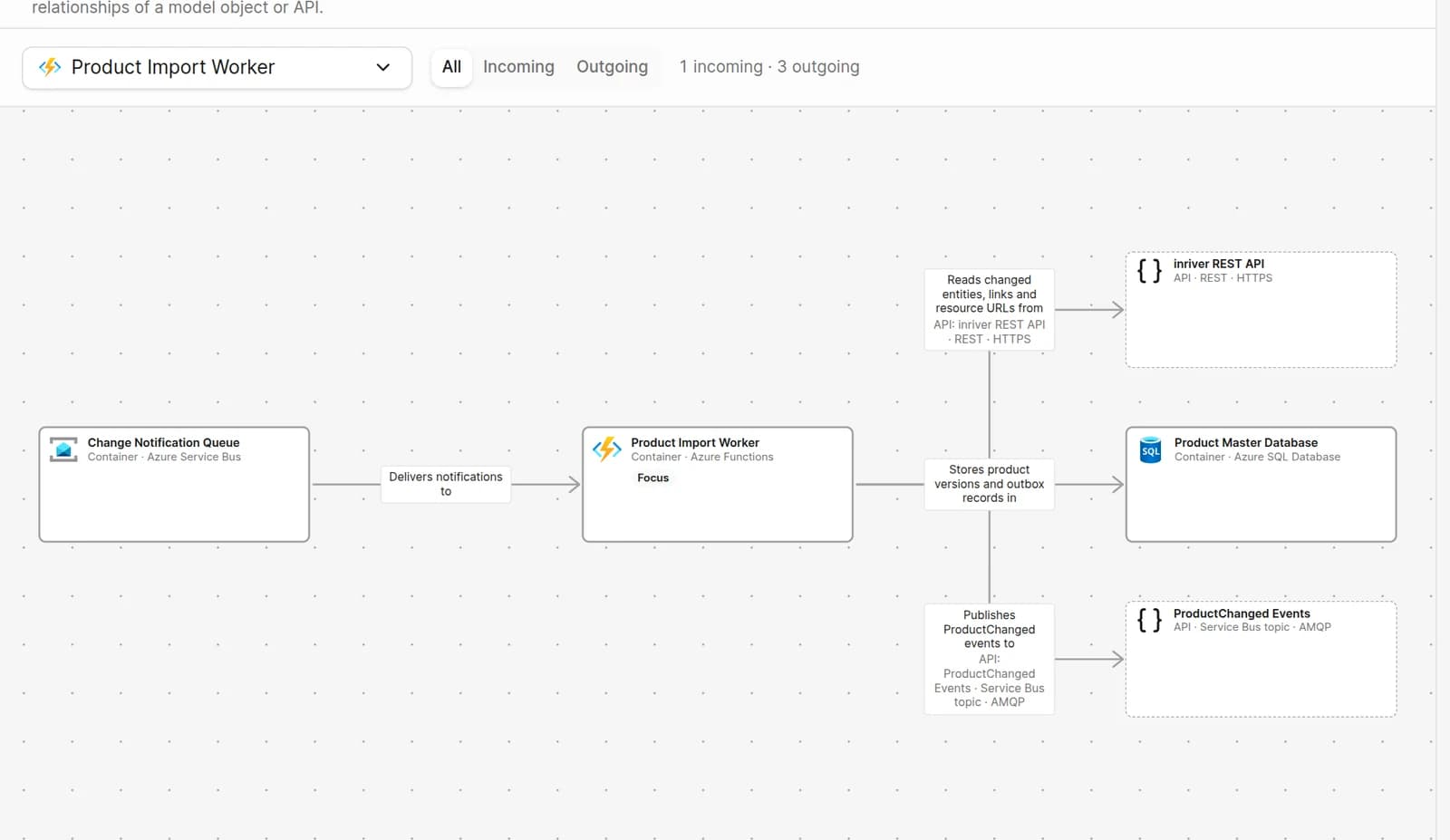
See what depends on it before you change it
- Find who consumes an API before you change it.
- Follow a dependency by focusing the next object.
- Group the whole model by team, technology or environment.
Design
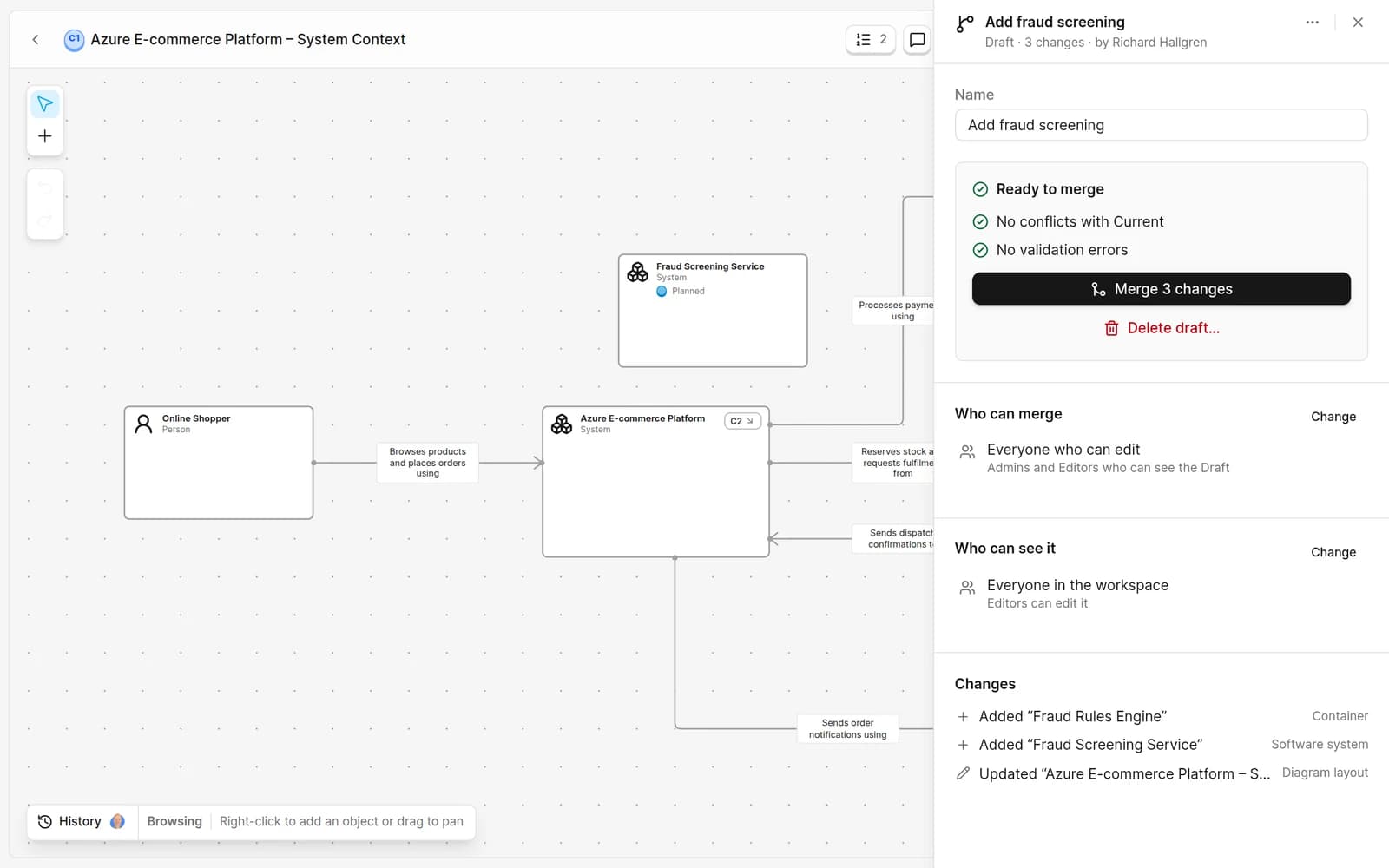
See Current. Propose what comes next.
- Design the future state without touching Current.
- Share the change list with readers for free.
- Keep the full version and audit history of the model.
Govern
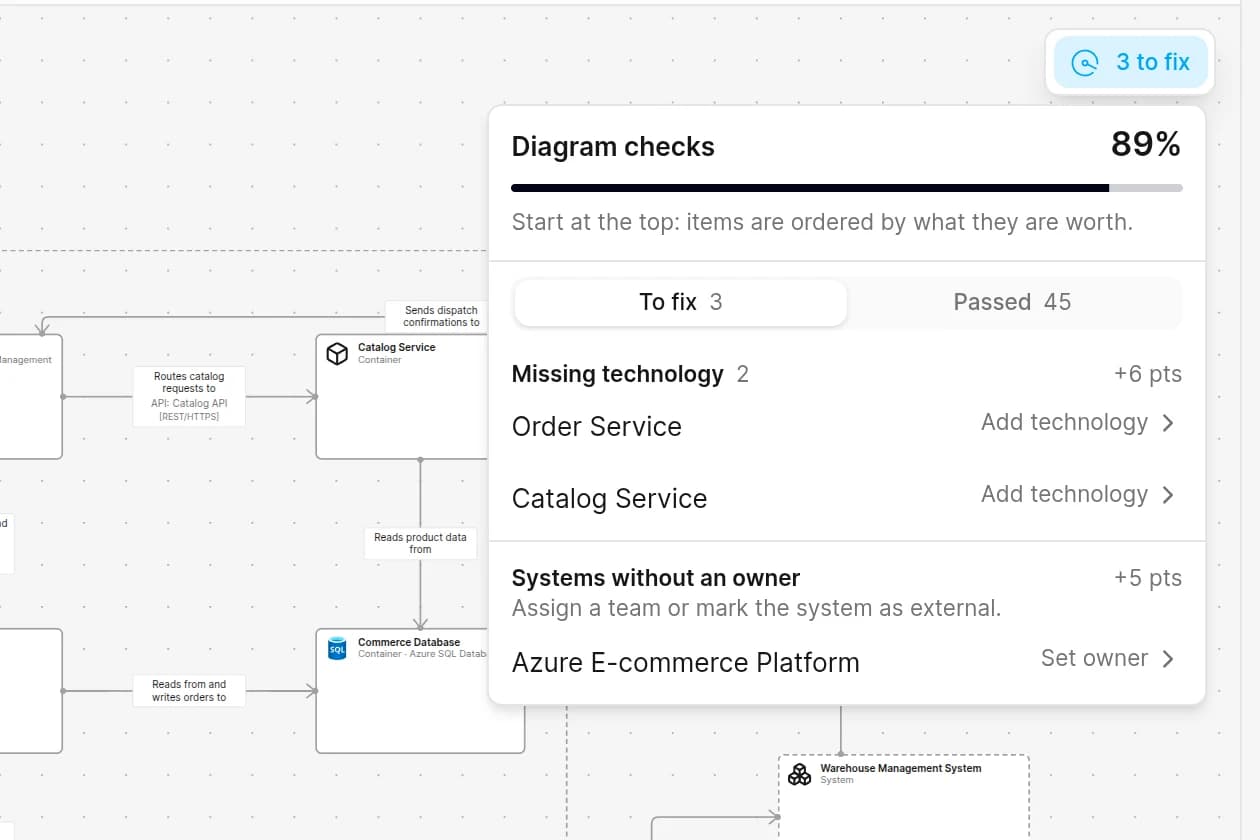
Know the model is right before you share it
- Give every element an owner team and a lifecycle.
- Add custom attributes and tags for your standards.
- Review checks per view before you merge.
We used to leave documentation until the end of a project. Now we capture it during the design phase, before development starts. It’s surprisingly quick to do, so it’s there when the team needs it.
 Robin HultmanCTO, Integrio
“At Spotify, we have an incredibly complex network of thousands of interlinked software systems owned by hundreds of teams, so having a simple way to visualize these connections is essential. We need tools to look at our architecture at different abstraction levels in order to make good design decisions and evolve our software in a sustainable way.”
Start from an example. Make it yours.
Free for one editor. Pro is €39 per editor per month. Readers are always free.